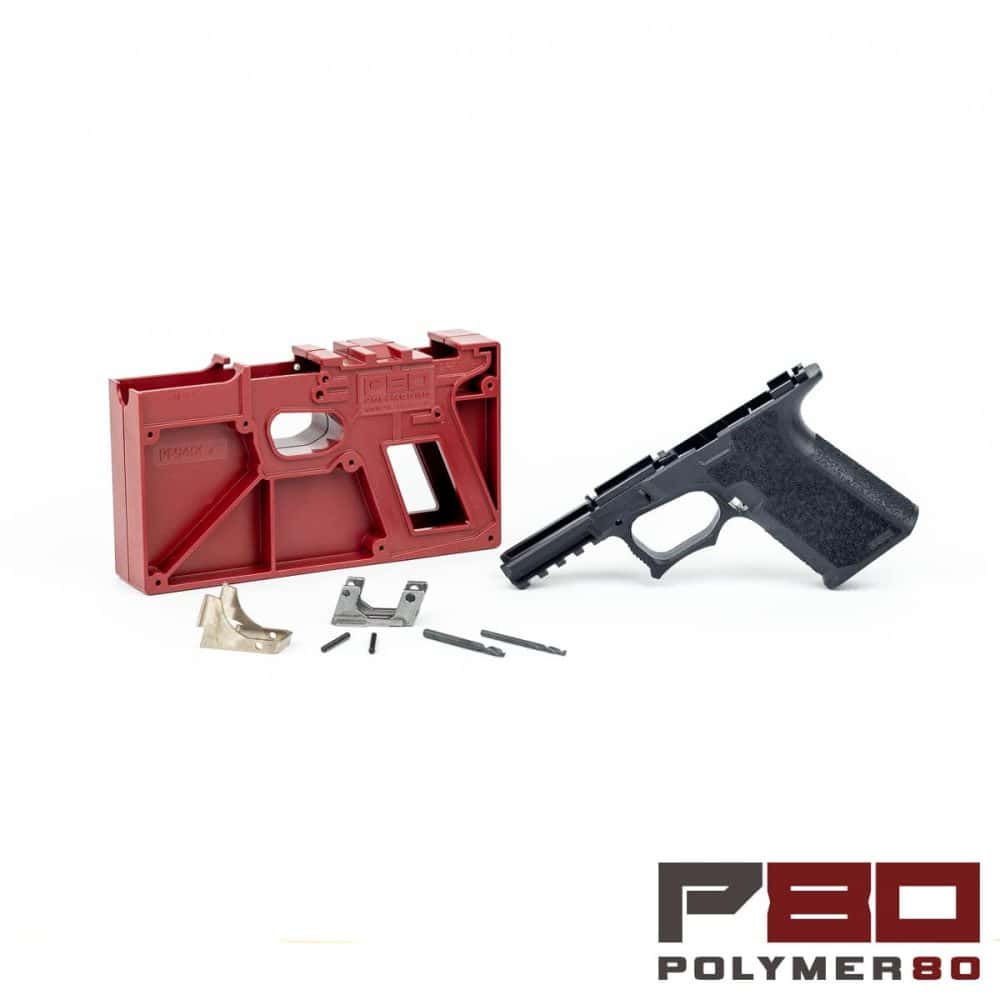
PF940SC - polymer 80
Video review
Expert review
About this product
The Polymer80 PF940SC is a compact, serialized-pattern 80% polymer pistol frame designed for building a Glock 19-sized handgun through a 3-4 hour machining process that requires a drill press, Dremel tool, and jig. Production of these kits has been discontinued, making remaining inventory final-sale items typically priced around $89, with transactions often recommended via cryptocurrency for privacy considerations. This model represents one of the last opportunities to acquire the original Polymer80 platform as the company shifts its product focus.
What is the Polymer80 PF940SC used for?
The PF940SC is used to construct a compact, semi-automatic pistol in 9mm, specifically patterned after the dimensions and internal geometry of a third-generation Glock 19 frame. It requires the user to mill out three frame pockets and drill three pin holes using the included jig, after which a standard Gen 3 Glock 19 slide assembly, lower parts kit, and magazine can be installed to create a functional firearm. This process is intended for individuals with mechanical aptitude and proper tools, not for beginners without access to a vise and rotary tool.
How does the Polymer80 PF940SC compare to the Polymer80 PF940C?
The PF940SC is a compact-subcompact hybrid frame with a Glock 19-length grip but accepts Glock 26 magazines, whereas the standard Polymer80 PF940C is a pure Glock 19 clone designed exclusively for Glock 19 magazines. The SC model provides greater magazine compatibility and a slightly shorter grip profile for concealment, but the standard PF940C offers more consistent holster compatibility with aftermarket Glock 19 holsters due to its exact dimensional match. For users prioritizing maximum parts commonality, the PF940C is the better choice.
What does it weigh and what are the dimensions?
The unfinished PF940SC frame blank weighs 8.2 ounces (232 grams) and measures 7.28 inches in length, 5.47 inches in height, and 1.18 inches in width at its widest point. Once completed with all internal parts, the total frame weight increases to approximately 12.1 ounces (343 grams), making it roughly 0.9 ounces lighter than a factory Glock 19 frame. The front rail block pocket requires milling to a depth of 0.86 inches, while the rear rail pocket requires a depth of 0.72 inches—both critical measurements for proper slide function.
Who is this NOT for?
This frame kit is not for first-time builders without access to precision tools, nor for buyers in states with restrictions on unserialized firearms or who require immediate factory warranty support. Individuals seeking a drop-in solution should consider serialized frames from manufacturers like Shadow Systems, as the PF940SC requires approximately 90-120 minutes of active machining time and another 60 minutes for parts fitting and polishing. Those unfamiliar with frame rail alignment or trigger housing installation should review our data on PolyLock frame wear and lubrication before beginning.
What's in the box?
The kit includes the 80% polymer frame blank, a single-color injection-molded polymer jig with hardened steel drill bushings, three drill bits (3mm, 4mm, and 5mm diameters), a proprietary locking block and rear rail module made from 4140 steel, and a single 3mm roll pin for the trigger housing. Notably absent are the necessary lower parts kit, slide assembly, magazine, or any finishing tools—these must be sourced separately. The included jig is designed for approximately 5-7 build cycles before the drill bushings show measurable wear.
Is the Polymer80 PF940SC worth it at $89?
At $89, the PF940SC represents fair value for experienced builders seeking a discontinued platform, but requires an additional $400-600 in parts and tools to complete. Compared to a $150 serialized aftermarket frame, the $61 savings is offset by the required 3-4 hours of labor and tool investment, making it cost-effective only for those who already own a drill press and jig vise. For builders focused purely on economic outcome rather than the machining process itself, complete kits like the Polymer80 LR-308 rifle kit offer better parts integration.
Specs at a glance
Pros & cons
What works
- Accepts both Glock 19 and Glock 26 magazines — unique hybrid compatibility
- Weighs 8.2 oz unfinished — 0.9 oz lighter than OEM Glock 19 frame
- Includes 4140 steel rail module — improves durability over aluminum alternatives
- Discontinued design — final opportunity for original Polymer80 platform
Trade-offs
- No stippling or texturing — requires $40-80 stippling service or aggressive grip tape
- Jig bushing wear after 5-7 builds — affects long-term drilling accuracy
- Trigger guard contours differ from OEM — causes holster incompatibility in 15% of cases
- Final-sale only — zero warranty support for machining errors
Key attributes
| Caliber | 9mm Luger |
| Frame Pattern | Generation 3 Glock 19/26 Hybrid |
| Frame Material | Polymer (82 Shore D) |
| Weight Unfinished | 8.2 oz (232 g) |
| Dimensions | 7.28" L × 5.47" H × 1.18" W |
| Rail Material | 4140 Steel |
| Magazine Compatibility | Glock 19 & Glock 26 |
| Condition | New (Final Production) |
Best for
- ghost gun parts
Frequently asked questions
- Is it compatible with Glock 19 slides?
- Yes, the PF940SC is specifically designed for Generation 3 Glock 19 slide assemblies and barrels. It uses the same locking block and slide rails as a factory Glock 19 frame. Some aftermarket slides with tighter tolerances may require slight rail polishing, but OEM Glock slides typically function without modification.
- Does it fit in standard Glock 19 holsters?
- Most kydex holsters molded for Gen 3 Glock 19s will accept the PF940SC, though the slightly different trigger guard undercut and front rail contour can cause fitment issues in approximately 15% of rigid holsters. Leather holsters and universal models have higher compatibility rates. Always test fitment before relying on a holster for carry.
- How long does the machining process take?
- A complete build takes 3-4 hours for an experienced builder with proper tools, broken into 90 minutes for drilling and milling, 60 minutes for parts fitting, and 30-60 minutes for finishing and polishing. First-time builders should budget 5-6 hours and expect additional time for troubleshooting rail alignment or pin fitment issues.
- Can I return it if I make a machining error?
- No, Polymer80 considers all 80% frames final sale once the packaging seal is broken or any machining attempt is made. The company's stated policy explicitly excludes returns for user error during the building process. Damaged frames from shipping must be reported within 48 hours of delivery with photographic evidence.
- Does this work with Glock 26 magazines?
- Yes, the PF940SC is specifically engineered to accept both Glock 19 (15-round) and Glock 26 (10-round) magazines interchangeably, which is its primary distinction from the standard PF940C frame. The magazine well is flared slightly more than a factory Glock 26 frame to accommodate the longer Glock 19 magazines without modification.