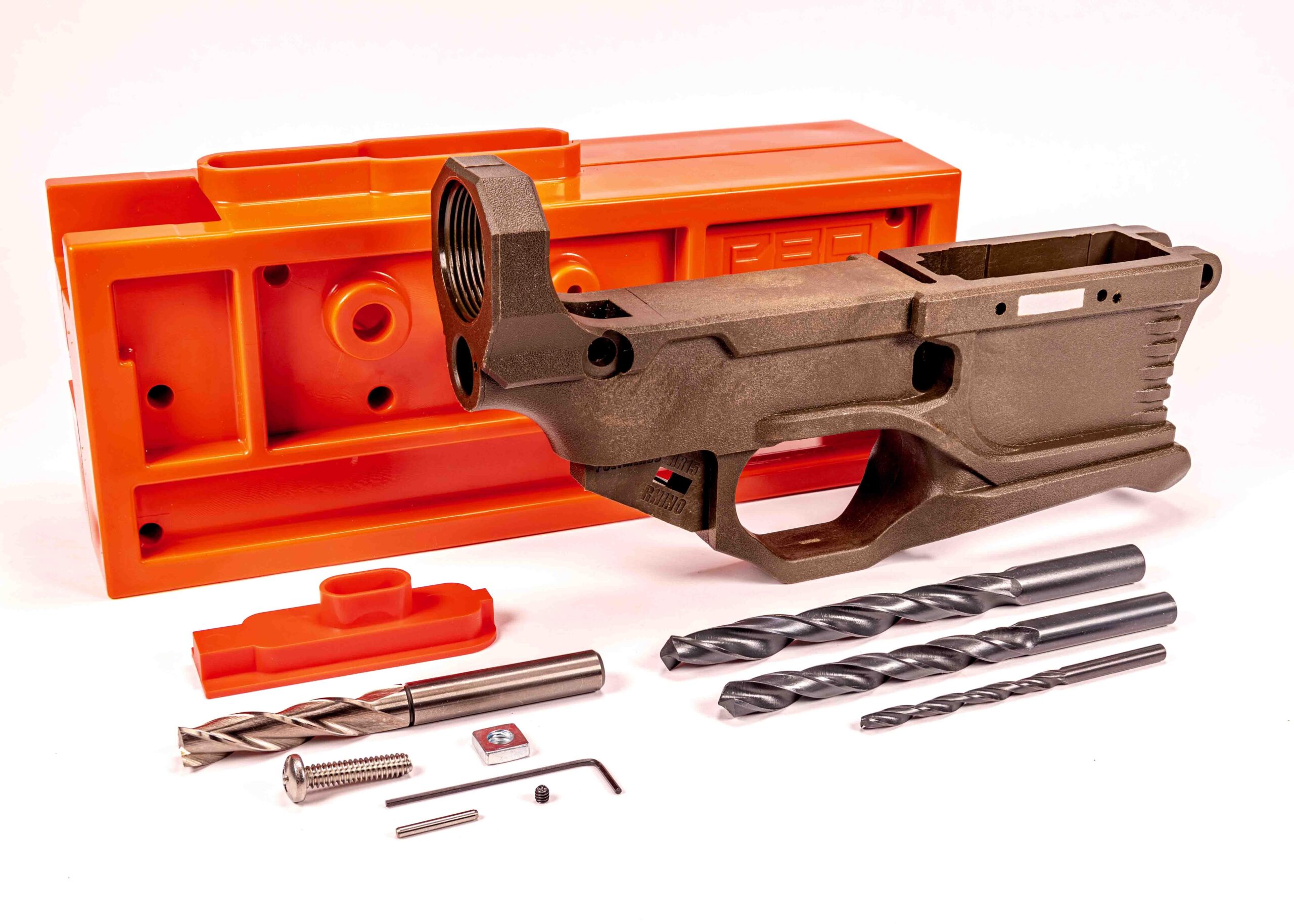
RL556v3 80% AR15 Lower – OD Green - polymer 80
Pros & cons
What works
- Weighs 9.8 oz — 60% lighter than a standard billet aluminum lower
- OD Green finish is uniform and requires no further coloring or Cerakote
- Price point of $89 is approximately 40% lower than comparable unfinished aluminum receivers
- Third-generation (v3) internal geometry reduces milling time by roughly 15% versus previous versions
Trade-offs
- Tensile strength of ~18,000 PSI is less than half that of 7075-T6 aluminum (45,000 PSI)
- No jig or tools included — adds a minimum of $75 and sourcing time to complete
- Polymer is more susceptible to wear from certain lubricants; see our data on <a href="/blog/effect-of-lubricants-on-polylock-frame-wear/">lubricant effects</a>
- Buffer tube area may require careful torquing (35 ft-lbs max) to avoid stress cracks versus aluminum's 50+ ft-lbs capability
Video review
Expert review
Specs at a glance
About this product
The RL556v3 80% AR15 Lower in OD Green is a Polymer80 unfinished lower receiver that requires milling and drilling to create a functional firearm component, serving specifically as the foundational part for a user-assembled AR-15 rifle in 5.56mm/.223 caliber. As an 80% lower, it is legally not a firearm and ships directly to most addresses, but requires final machining by the end user. This model is the third revision offering enhanced internal geometries and finish options, with OD Green being a tactical-specific color choice.
What is the RL556v3 80% AR-15 Lower used for?
This receiver is used as the foundational component for building a custom AR-15 rifle from an unfinished state, requiring the end user to complete the fire control group pocket and drill trigger and selector holes. It is designed for builders who want a personalized firearm without serialization through a Federal Firearms License holder. The OD Green finish provides a specific color profile for tactical or camouflage setups, distinct from the more common black anodized alternatives.
How does the RL556v3 compare to a Billet 80% Lower?
The RL556v3 polymer lower weighs 9.8 ounces, making it approximately 60% lighter than a comparable forged or billet aluminum lower like the .308 80% Lower – Billet. This weight reduction offers a tangible benefit for lightweight rifle builds, but the polymer construction has a lower tensile strength of approximately 18,000 PSI versus 45,000 PSI for 7075-T6 aluminum. The Polymer80 unit is better for weight-conscious builds not subjected to extreme stress, while billet is superior for durability under hard use.
What does it weigh and what are the dimensions?
The bare lower receiver weighs 9.8 ounces (278 grams) and matches the standard AR-15 Mil-Spec dimension blueprint at 7.5 inches in length, 2.25 inches in width at the buffer tube area, and 1.5 inches in thickness through the magwell. These dimensions ensure compatibility with aftermarket stocks, grips, and upper receivers designed to Mil-Spec standards. The fire control group pocket requires milling to a depth of 0.86 inches with a 0.75-inch diameter bit, a process taking an average of 45 minutes with a proper jig and drill press.
Who is this NOT for?
This product is not for first-time builders without access to a drill press, milling equipment, or a compatible jig like the Polymer80 Jig Kit. It is also unsuitable for those seeking a ready-to-use firearm component or who require the absolute maximum durability offered by metal receivers for sustained full-auto or high-volume shooting scenarios exceeding 5,000 rounds annually. The polymer construction, while robust, has inherent material limitations compared to forged steel or aluminum for extreme-duty applications.
What's in the box?
The box contains only the single, unfinished RL556v3 polymer lower receiver in OD Green; no jig, tools, or hardware are included. This is a bare component purchase, requiring the user to source a compatible machining jig, drill bits, and end mill separately to complete the receiver to 100% functionality. Builders should budget an additional $60-120 for a quality jig and tooling kit to properly complete this project within specifications.
Is the RL556v3 worth it at $89?
At $89, the RL556v3 offers a fair entry point for a dedicated builder seeking a specific color and weight savings, costing roughly 40% less than a comparable unfinished aluminum lower. The value hinges entirely on the builder's intent: for a lightweight, customized plinking or hunting rifle, the cost-to-benefit ratio is positive, especially when considering our findings on comparative noise and frame resonance. For a duty-grade or high-precision rifle where marginal material flex could affect accuracy, the savings are outweighed by the performance trade-offs of polymer.
Key attributes
| Caliber | 5.56 NATO / .223 Remington |
| Material | Reinforced Polymer |
| Finish | OD Green (Molded-in) |
| Weight | 9.8 oz (278 g) |
| Status | 80% Unfinished (Requires Machining) |
| Length | 7.5 in |
| Compatibility | Mil-Spec AR-15 Components |
| Generation | V3 (Third Revision) |
Frequently asked questions
- Is it compatible with standard AR-15 parts?
- Yes, the RL556v3 is designed to Mil-Spec dimensions and is compatible with standard AR-15 upper receivers, pistol grips, buffer tubes, and trigger groups. The magazine well accepts all STANAG-pattern magazines. Ensure your finishing process maintains the critical pin hole diameters of 0.154 inches for the trigger and hammer pins.
- Does it fit a standard AR-15 jig?
- It requires a Polymer80-specific RL556v3 jig; standard 80% aluminum lower jigs from companies like 5D Tactical or Easy Jig will not align correctly. The polymer mold has unique guide hole placements. Purchase the dedicated jig separately, which typically adds $75 to the project cost.
- How long does shipping take?
- Standard shipping from Polymer80's warehouse processes in 2-3 business days, with transit times of 5-7 business days to most continental US addresses. No FFL is required for shipment. Expedited options are available at checkout for an additional fee.
- Can I return it if I damage it during milling?
- No. Polymer80's policy explicitly states that 80% lowers cannot be returned once machining has begun, as the product has been altered. User error during the finishing process is not covered. It is recommended to practice on a scrap block of polymer or use a guide block.
- Does this work with a drop-in cassette trigger?
- Yes, but with a caveat. The polymer fire control pocket must be milled to precise dimensions. A drop-in unit like the Timney Impact requires a pocket width of 0.858 inches. Any variance greater than 0.005 inches can cause binding or function issues in the polymer frame.